My favorite image from Hypnotism, as I wrote in the last entry, is an engraving of a sleepwalking woman in a cage with big cats:
Using this image as a kind of base, I've made some sketches for the letter H. First this one:
And then this one, where the mesmerizing pair in the lower left have been flipped:
Somehow, I'm disappointed I have less of a history of hairstyling than I thought, but I can always add that in later. It's a lot of fun to stretch, tweak and layer these images in Photoshop, which I'm slowly learning to use after stubbornly insisting on sticking to paper, scissors, and glue for a long time. But I'm still a little creaky when it comes to cutting out details like the "rays" extending from hands of the 18th Century hypnotist, which I want to invisibly separate from the figures in order to make them a little more transparent...
Looking at the letter "I" in early February, I was drawn to a series of images of incense:
It's amazing that politics, history, and religion can be so intimately woven into these images - from "The Altar of Incense as God probably wanted Moses to construct it" in the first image, to the second image's French incense burners "a la moderne" (from 1775), the intricate organic imagery of the Moroccan censer, and the American incense meant to replace Japanese imports during World War II. Though none of the images that told me so grabbed me as much as these did, I was amazed to learn that there are very ancient traditions for making incense used in religious rituals in every corner of the world. I'd always associated incense with Asia and the Middle East, but it's been made from resins, roots, berries, and fragrant wood from all over the world, and seems to have been a feature of many pre-Columbian religious rituals in Latin America as well as nearly everywhere else.
I love finding visual recordings of practices just on the edges of my personal and familial memory. My great grandparents remembered these ice wagons (from the folders labeled "Ice") and the process of harvesting ice very well.
These "Summer Luxuries" are now a so-called necessity that many of us find already made in the trays in our freezer. I wish I'd scanned some photos of the metal tongs and other tools of the icemen's trade. Perhaps I'll dive back in later to find them.
It was getting close to lunch time when I encountered the files on ice cream, from which I selected a couple of vintage advertisements:
I'd like to somehow make them into an ice cream sundae mountain,or a forest of soft serve ice cream cones, shrouded in incense, where an ivory elephant roams in search of a frosty cocktail...
An alphabetical journey through the the New York Public Library's Picture Collection, where over a million image clippings provide an idiosyncratic visual history of the world.
If you want to support this project, click the PayPal Donation Button
Monday, April 4, 2011
Friday, April 1, 2011
Hypnotic rays and a short history of hairstyling, Feb. 1 Journal entry
Do you think I know what I'm doing?
That for one breath or half a breath I belong to myself?
As much as a pen knows what it's writing,
or the ball can guess where it's going next.
(Rumi, arranged by Coleman Barks)
This is the kind of arranging I feel like I'm doing myself at the Picture Collection.
I'm not always sure what drives me to look at individual images, but I love that I
found a history of hairstyling today, from ancient times to the present:
Even more compelling is the concise visual history of hypnosis I find:
![]() | ||
| This last is a truly alarming image I can't shake out of my mind.... |
I'll have to upload that one in the next post, however, because for some reason the uploader doesn't like it as much as I do. For now I'll try to avoid smoking under hypnosis...
Wednesday, March 30, 2011
F is for Forest and G is for Gaucho, January 31st
Certain files and images I've run across in the picture collection may or may not make it into the film, but they will stick in my mind. I went back today to look at a folder I'd noticed before, labeled "Dead, The." I won't reproduce any of the images here, but I suggest you look at them if you get a chance. Most of us (me included) avoid thinking of death. But it is the only thing we are guaranteed to experience one day.
The folder is, as you'd expect, a catalogue of corpses: people laid out in their funereal best. There are echoes of the Victorian funeral photos I first saw as a child in Washington, Arkansas and that are so creepily referenced in the brilliant ghost story The Others. But it's also, of course, an outline of some of our culture's modes of thinking about death and the dead (as well as their legacies.)
Other images that stick in my mind are of things I've never imagined, like this uncanny armor made from raffia and shells on the Gilbert Islands, which reminds me of images of Cuban Abakua ceremonies or photographs of Yoruba ritual. But this armor comes from tiny atolls in the Pacific...
Plus another favorite that I can't resist scanning, a 1967 image of the "Nympho Gaucho of the Matto Grosso," handily labeled at the lower right of the image below. Try saying that five times fast...
And I have to admit it should be interesting to have the aye-aye meet some Giants:
I imagine Goya's giant may be looking toward Gibraltar, hoping the queen will come for a visit.
But then I turn back to F, where the folder for "Fortune Telling" beckoned. I was hoping for images of craggy gypsies, but found I was more attracted to guides for palm reading:
The second one is actually Napoleon's hand, so you can evaluate the accuracy of palmistry using a reliable case history. Is that the hand he always kept inside his vest?
I love very general categories, like "Forests," more than I thought I might. A very brief cross section might include:
If the tools of palmistry become totems of the forest, this could provide another interesting place for the aye-aye to travel. One of the palms could close around him, and a giant or a gaucho could set him free and drag him off to "G".
The folder is, as you'd expect, a catalogue of corpses: people laid out in their funereal best. There are echoes of the Victorian funeral photos I first saw as a child in Washington, Arkansas and that are so creepily referenced in the brilliant ghost story The Others. But it's also, of course, an outline of some of our culture's modes of thinking about death and the dead (as well as their legacies.)
Other images that stick in my mind are of things I've never imagined, like this uncanny armor made from raffia and shells on the Gilbert Islands, which reminds me of images of Cuban Abakua ceremonies or photographs of Yoruba ritual. But this armor comes from tiny atolls in the Pacific...
And then there are things I just never think about much, like fog horns:
And every time I visit, I fall in love with a category I had no preconceptions about. Today it's the folders for Gauchos, where I find the following range of images:
Plus another favorite that I can't resist scanning, a 1967 image of the "Nympho Gaucho of the Matto Grosso," handily labeled at the lower right of the image below. Try saying that five times fast...
And I have to admit it should be interesting to have the aye-aye meet some Giants:
![]() |
| This one seems to come in both economy and sample sizes.... |
I imagine Goya's giant may be looking toward Gibraltar, hoping the queen will come for a visit.
But then I turn back to F, where the folder for "Fortune Telling" beckoned. I was hoping for images of craggy gypsies, but found I was more attracted to guides for palm reading:
The second one is actually Napoleon's hand, so you can evaluate the accuracy of palmistry using a reliable case history. Is that the hand he always kept inside his vest?
I love very general categories, like "Forests," more than I thought I might. A very brief cross section might include:
If the tools of palmistry become totems of the forest, this could provide another interesting place for the aye-aye to travel. One of the palms could close around him, and a giant or a gaucho could set him free and drag him off to "G".
Tuesday, March 29, 2011
The letter E, January 26
Today I feel like a kid in the (image) candy shop, but also like I'm racing through the Louvre like the characters in Godard's Band of Outsiders, as if I'm missing great stuff by rushing, yet enjoying the exhiliration of the run anyway...
I'm always drawn to the files on places I've never been, especially the ones that trace our ever-shifting Euro-American ideas of the other (and their art). The noble savage, the intrepid (pith-helmeted) explorers, the magnificent monument, and the scattered skeletons. Take Easter Island, for example:
There's also a strange (if inadvertent) humor to the collection just because odd things are juxtaposed simply by virtue of their alphabetical proximity. Right after Easter Island, I looked at Easter Eggs:
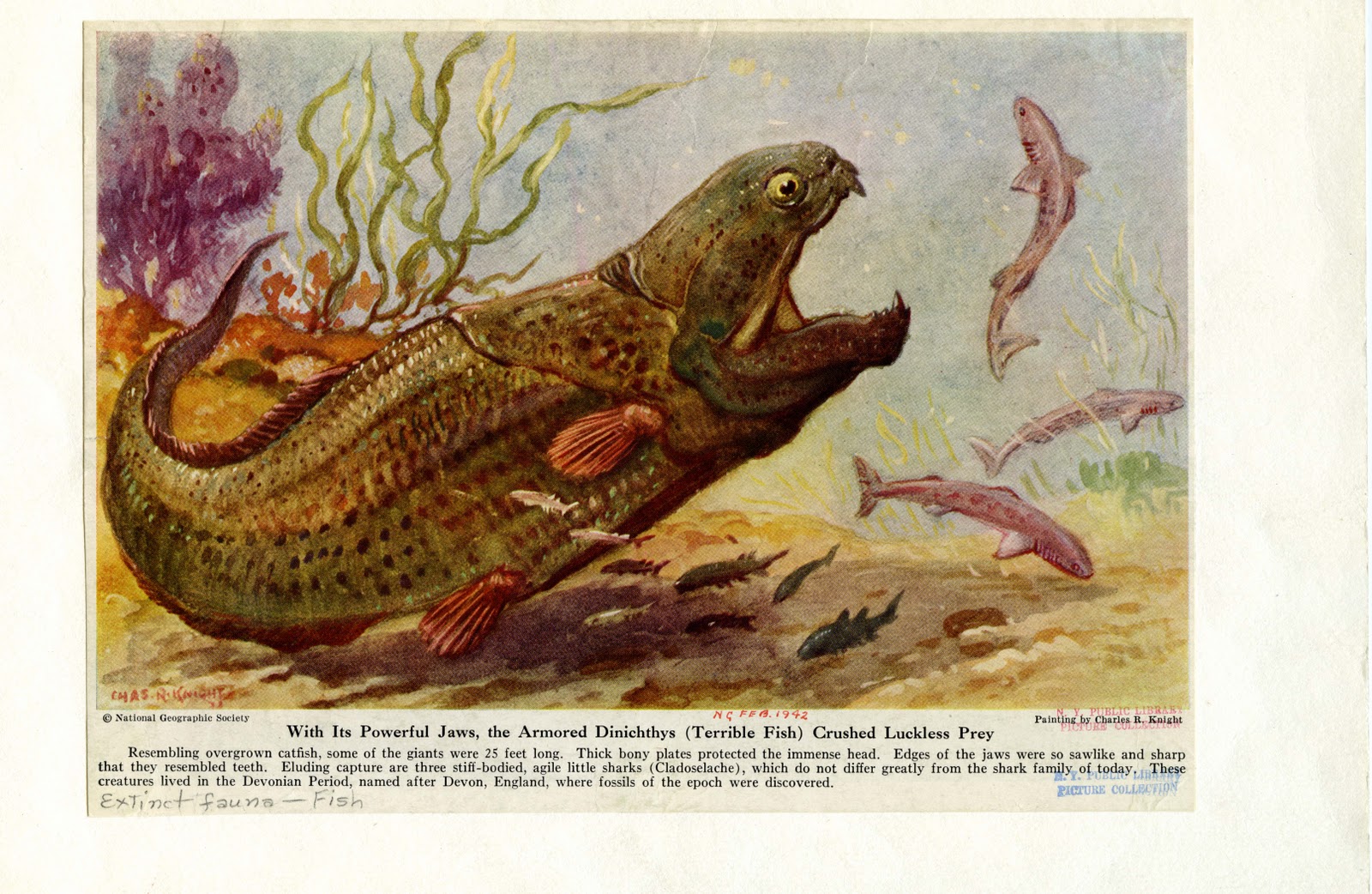
And then there's always Extinct Fauna...
THese should make for an interesting E-world, but now I'm wondering whether and how I can integrate the labeling for these images into the film:
I love all these slightly different pencil marks, as well as the category names...
But mostly, today, I'm thinking about my brother-in-law, Craig Arnold, whose blog is still out there in cyber space, though he himself disappeared in Japan in 2009. The story is far more mysterious than any of the news accounts, but I'm not sure it's mine to tell. I miss him still, though, and when I found a translation of a Basho poem on the same day as one particular Easter Island image above, I decided to color in the engraving and put them together here...
I'm always drawn to the files on places I've never been, especially the ones that trace our ever-shifting Euro-American ideas of the other (and their art). The noble savage, the intrepid (pith-helmeted) explorers, the magnificent monument, and the scattered skeletons. Take Easter Island, for example:
There's also a strange (if inadvertent) humor to the collection just because odd things are juxtaposed simply by virtue of their alphabetical proximity. Right after Easter Island, I looked at Easter Eggs:
And then there's always Extinct Fauna...
THese should make for an interesting E-world, but now I'm wondering whether and how I can integrate the labeling for these images into the film:
I love all these slightly different pencil marks, as well as the category names...
But mostly, today, I'm thinking about my brother-in-law, Craig Arnold, whose blog is still out there in cyber space, though he himself disappeared in Japan in 2009. The story is far more mysterious than any of the news accounts, but I'm not sure it's mine to tell. I miss him still, though, and when I found a translation of a Basho poem on the same day as one particular Easter Island image above, I decided to color in the engraving and put them together here...
Subscribe to:
Posts (Atom)


